

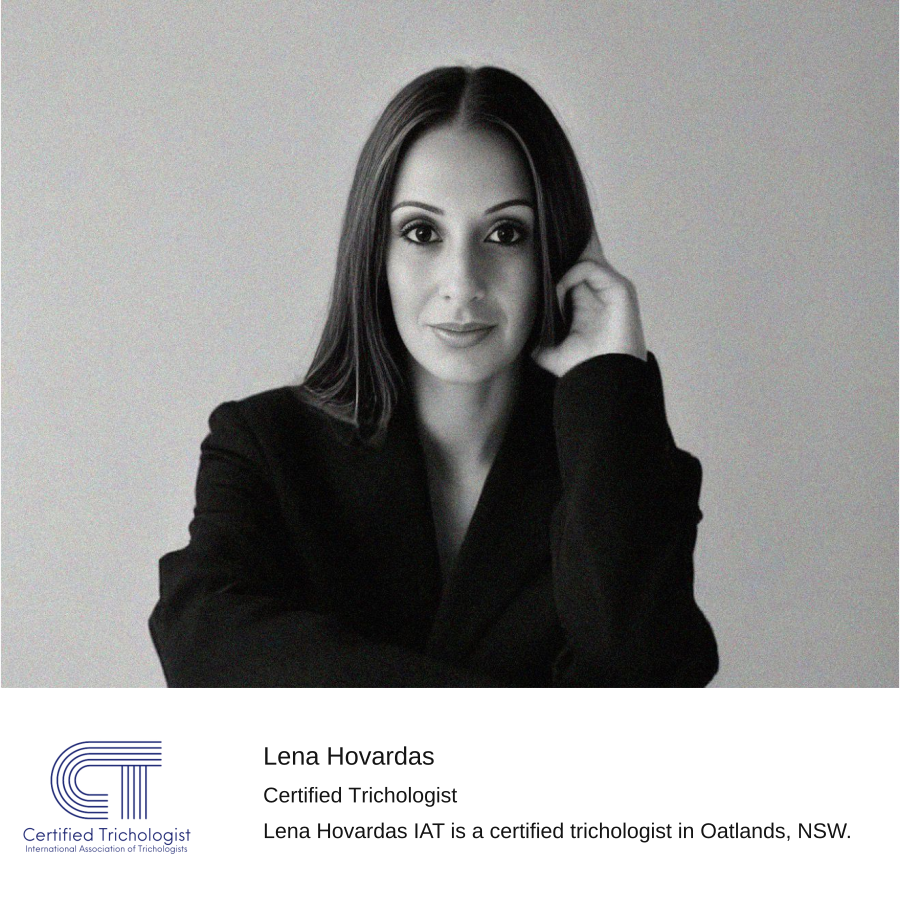
Lena Hovardas - Trichologist
Lena Hovardas is a specialist Trichologist in scalp health and hair rejuvenation. As a certified member of the International Association of Trichologists (I.A.T.), Lena delivers expert, evidence-based clinical care focused on identifying and addressing the root causes of hair and scalp concerns.
Her expertise spans genetic pattern hair loss, hormonal imbalances, nutritional deficiencies, stress-related shedding, alopecia, dandruff, oily or irritated scalps, as well as general thinning and loss of hair vitality.
Through tailored, non-invasive and supportive treatment plans, Lena emphasises regenerative and restorative approaches to promote healthier, stronger, and fuller hair. These include specialised scalp therapies, therapeutic massage, evidence-based topical treatments, nutritional optimisation, lifestyle guidance, and advanced options such as micro needling where clinically appropriate.
What’s a Trichologist?
Trichologist is a specialist in hair and scalp health who focuses on identifying, understanding, and managing disorders of the hair and scalp. Trichologists are trained to assess the structure, growth cycle, and health of hair, as well as the biological, hormonal, nutritional, lifestyle, and environmental factors that influence hair loss and scalp conditions.
Unlike cosmetic or product-based approaches, trichology is diagnostic and evidence-informed, with an emphasis on treating the cause – not just the symptom.
What Does a Trichologist Treat?
Trichologists assess and manage a wide range of hair and scalp concerns, including:
Hair Loss Conditions
Female pattern hair loss
Male pattern hair loss
Telogen effluvium (stress- or illness-related shedding)
- Hormonal-related thinning
Alopecia areata and other autoimmune-related hair loss
Diffuse thinning and reduced hair density
Breakage and hair fragility
Scalp Conditions
Dandruff and chronic flaking
Seborrheic Dermatitis
Psoriasis and Eczema
Oily or congested scalp
Dry, tight, or itchy scalp
Scalp inflammation, folliculitis or irritation
Follicle blockage
Sensitivity and redness
Hair & Scalp Health Concerns
Poor hair growth or slow regrowth
Excessive shedding
Loss of volume and vitality
Hair texture changes
Scalp imbalance affecting hair quality
What Causes Hair Loss?
Hair loss is rarely due to a single factor. A trichologist is trained to identify multiple contributing causes, which may include:
Genetics
Hormonal changes
Stress and nervous system overload
Nutritional deficiencies
Inflammation or scalp disease
Medications or medical conditions
Lifestyle factors (sleep, training load, illness, recovery)
Understanding why hair loss is occurring is essential before treatment begins.
What Happens During a Trichology Consultation?
A trichology consultation is thorough, non-invasive, and individualised. It typically includes:
A detailed medical, hormonal, and lifestyle history
Review of medications, supplements, and past treatments
Scalp and hair analysis (including pattern, density, and scalp health)
Discussion of triggers, timelines, and progression
Identification of contributing and root causes
Education around your specific hair loss type
Development of a tailored treatment and management plan
Where appropriate, a trichologist may recommend blood testing, GP collaboration, or referral to ensure underlying health issues are addressed.
Treatments offered by a Trichologist
Treatment plans may include scalp therapies, evidence-based topicals, nutritional optimisation, lifestyle guidance, and regenerative options such as micro needling or PRP when suitable.
How long before I see results?
Hair growth is slow. Most patients notice changes between 3–6 months, with optimal results over 6–12 months.
Are hair regrowth results guaranteed?
No ethical clinic guarantees results. Outcomes depend on diagnosis, consistency, and individual response.
What happens during a consultation?
We conduct a detailed health and lifestyle review, scalp and hair analysis, and discuss contributing factors and treatment options. All assessments are non-invasive.
Will I be pressured to buy products or start treatment?
Absolutely not. Our role is to educate and guide patients using evidence-based trichology. We’ll explain your results and available options, but there is no obligation to purchase products or begin treatment.
Do I really need to see a professional?
Q: Is hair loss normal, or should I be concerned?
A: Some daily shedding is normal, but persistent thinning, widening parts, scalp changes, or sudden shedding usually indicate an underlying issue worth assessing.
Q: When should I see a specialist about hair loss?
A: If hair loss is progressive, sudden, affecting confidence, or not improving after 3–6 months, professional assessment is recommended.
Q: Can hair loss be reversed?
A: Some types can be improved or stabilised, especially when addressed early. Others are managed long-term to preserve and strengthen existing hair.
Who should I see for hair loss?
Q: What’s the difference between a trichologist and a dermatologist?
A: A trichologist specialises in hair and scalp health, focusing on causes, lifestyle, and non-invasive management. Dermatologists manage medical and skin-based conditions and may prescribe medications.
Q: Do I need a referral?
A: No referral is needed to see a trichologist.
Q: How do I know someone is qualified?
A: Look for recognised training, professional membership, experience, and a clear diagnostic approach – not just product sales.
What causes hair loss?
Q: Is hair loss always genetic?
A: No. While genetics are common, hair loss can also be caused by hormones, stress, illness, nutritional deficiencies, scalp conditions, or medications.
Q: Can stress cause hair loss?
A: Yes. Physical or emotional stress can trigger excessive shedding (telogen effluvium), often appearing 2–3 months after the trigger.
Q: Can diet or iron levels affect hair?
A: Absolutely. Low iron, protein, zinc, or certain vitamins can impair hair growth and contribute to shedding.
Is my trichologist appointment covered by Private Health insurance?
No. Private Health insurance does not cover trichology services.
What happens if I cannot make my appointment
We understand that sometimes life gets in the way, and our rescheduling policy is requires patietns to provide no less than 48 hours notice.
Booking Policy
All booking retainers are non-refundable. Patients may reschedule their appointment provided a minimum of 48 hours’ notice is given to the clinic via phone or email.
Are results guaranteed?
No ethical clinic guarantees results. Outcomes depend on diagnosis, consistency, and individual response. A Trichologist will focus on diagnosis, evidence-based care, personalisation, and long-term hair and scalp health – not quick fixes.
Do I need a referral?
No. You can book directly without a GP referral.
How long is the initial consultation?
Initial consultations typically run 45–60 minutes to allow for a thorough assessment.
What should I bring to my appointment?
Any recent blood test results, a list of medications/supplements, and details of previous hair treatments.
What types of hair loss do you treat?
We assess and manage genetic hair loss, hormonal hair loss, stress-related shedding, nutritional hair loss, alopecia, and scalp-related hair loss.
Do you treat both men and women?
Yes. Hair loss presents differently in men and women, and treatment is tailored accordingly.
Can hair loss be reversed?
Some forms can improve or regrow, while others are managed to slow progression and preserve hair density.
Is hair loss always genetic?
No. Many cases involve multiple contributing factors beyond genetics.
Can stress or illness cause hair loss?
Yes. Stress, illness, surgery, or major life events can trigger temporary shedding.
Does age affect results?
Earlier intervention generally yields better outcomes, but improvement is possible at many stages.
Is hair loss different for men and women?
Yes. Causes, patterns, and management strategies differ between men and women.
What if I’ve already tried products that didn’t work?
Many products fail because the underlying cause wasn’t addressed. Proper diagnosis changes outcomes. Trichologist is a specialist at identifying the hair shedding causes.
Conditions a Trichologist will not treat
Head Lice (Pediculosis Capitis): Tiny parasitic insects causing intense itching and visible nits (eggs) on hair shafts. Tinea Capitis (Ringworm of the Scalp): A fungal infection causing scaling, redness, and sometimes hair loss.